
National Team
Malaysia National Football Team Players: 2026 Guide
Who plays for the Malaysia national football team in 2026? A guide to the Harimau Malaya squad, key players, the banned naturalised seven and the U23 side.
Updated 20 August 2026 · Kedafa editorial
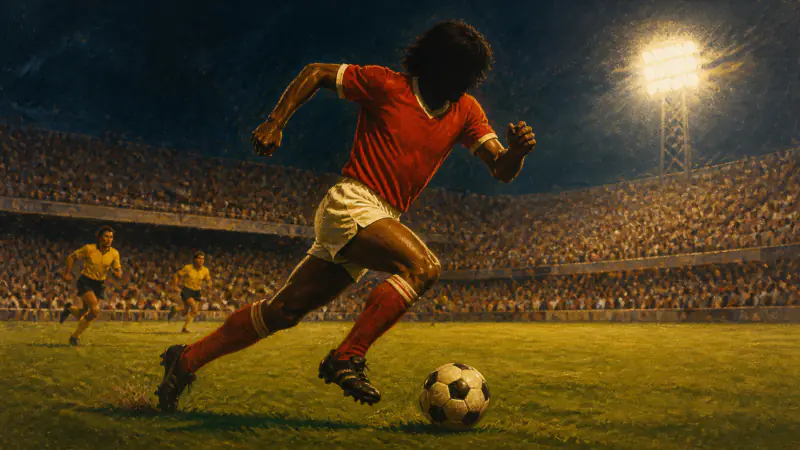
Ask any Malaysian over fifty to name the greatest footballer the country ever produced and you will get one answer, usually delivered as a single word: SuperMokh. Mokhtar Dahari was the barrel-chested Selangor striker who, through the 1970s, made Merdeka Stadium shake — and whose death at 37 remains one of the saddest stories in Malaysian sport.
This is his story: the verified record, the legends, and the line between them.
Born in Setapak, Kuala Lumpur in 1953, Mokhtar came through Selangor’s system and spent virtually his whole career with the state side — the Red Giants — in the era when Malaysian football meant the Malaysia Cup and packed stadiums. Squat, explosive and two-footed, he was the archetype of a striker who scored every kind of goal: thunderbolts from thirty metres, headers he had no right to win, solo runs through entire defences.
He made his international debut as a teenager in the early 1970s and became the face of Malaysian football’s strongest-ever era — the side that qualified for the 1972 Munich Olympics and earned a place at the 1980 Moscow Games, the tournament Malaysia boycotted.
Malaysian sources commonly credit Mokhtar with 89 international goals in 142 appearances, which would place him among the highest-scoring internationals in the game’s history. FIFA-recognised figures are lower. The discrepancy is honest: in the 1970s Malaysia played stacked calendars of tournaments — the Merdeka Cup, King’s Cup, President’s Cup — where opponents were sometimes club sides, B teams or Olympic selections, and not every match qualifies as a full international by modern classification.
The truthful summary: by any counting method, Mokhtar is Malaysia’s record scorer, and no Malaysian has come near his output since.
Three stories follow SuperMokh everywhere, and they deserve honest handling.
The England B goal — documented. In 1978, Malaysia held an England B side containing full internationals to a 1–1 draw in Kuala Lumpur, with Mokhtar scoring a famous goal. This one is well recorded and did much to spread his name beyond Asia.
The Real Madrid offer — plausible but unproven. The story goes that after impressive performances, Real Madrid expressed interest in signing him, and that Mokhtar declined, choosing to stay in Malaysia. No documentary evidence of a formal offer has ever surfaced. What is true is that he repeatedly turned down opportunities to move abroad in an era when Asian players almost never did.
Facing Maradona — folklore. Versions of a match against a touring Argentine selection circulate widely with differing dates and scorelines. Records of such friendlies are patchy, and the details vary too much between tellings to state as fact. We flag it as the myth it may well partly be — the very existence of the story tells you what Malaysians believed he was worth.
In the late 1980s, after retiring as a player, Mokhtar began losing strength. The diagnosis was motor neurone disease — reported across Malaysia at the time as muscular dystrophy. The nation watched its strongest athlete grow frail with terrible speed. He died on 11 July 1991, aged 37.
His funeral drew enormous crowds. For a generation of Malaysians, his death marks the moment the golden age of the national game formally ended — within three years, the match-fixing scandal would bury what remained of it.
Mokhtar’s name is now the country’s shorthand for footballing excellence. The national elite youth academy — Akademi Mokhtar Dahari (AMD) — carries it, which is fitting: the academy exists to industrialise what Mokhtar embodied naturally. Roads bear his name; so does a trophy. And every discussion of the current national team eventually arrives at the same benchmark: Malaysia will be back when it produces another player who makes the region afraid the way SuperMokh did.
No pressure, Akademi. But that is the assignment.
Mokhtar Dahari died on 11 July 1991, aged 37, after suffering from motor neurone disease — widely reported in Malaysia at the time as muscular dystrophy. His decline from athletic icon to wheelchair user shocked the nation.
Mokhtar was famously not tall — commonly listed around 1.65m (5ft 5in). His power came from an extraordinary physique: massive thighs, explosive pace and a shot struck harder than players a head taller.
The popular story says Malaysia faced a touring Argentina-linked side in 1982 and Mokhtar starred. Records of that era's friendlies are patchy, and details vary by telling. What is documented is his goal against an England B side in 1978.
Counting is complicated because many 1970s internationals were not full 'A' matches. Malaysian records commonly credit him with 89 goals in 142 appearances; FIFA-recognised tallies are lower. Either way, he is Malaysia's greatest goalscorer.
Who plays for the Malaysia national football team in 2026? A guide to the Harimau Malaya squad, key players, the banned naturalised seven and the U23 side.
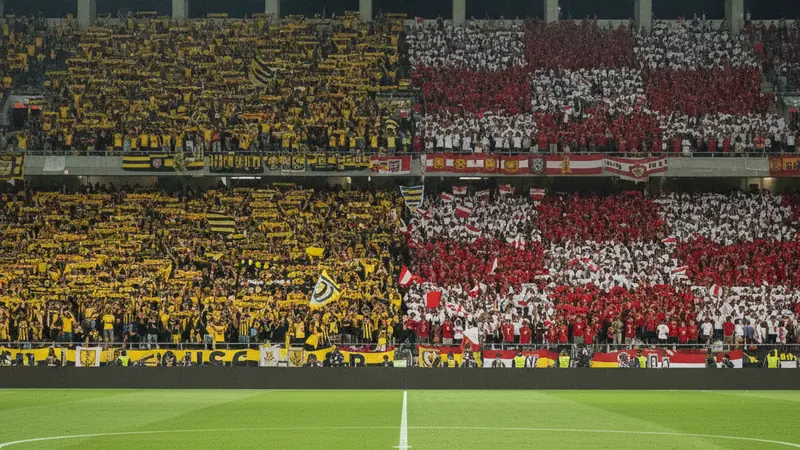
The Causeway Derby explained: how the Malaysia vs Singapore rivalry began in 1958, the head-to-head record, the three 6-0 wins and what the 2026 rout means.

The FIFA ASEAN Cup explained: how Malaysia went unbeaten yet missed the final on goals scored, FAM's stoppage-time complaint to FIFA, and the bronze match.