
National Team
Malaysia National Football Team Players: 2026 Guide
Who plays for the Malaysia national football team in 2026? A guide to the Harimau Malaya squad, key players, the banned naturalised seven and the U23 side.
Updated 17 September 2026 · Kedafa editorial
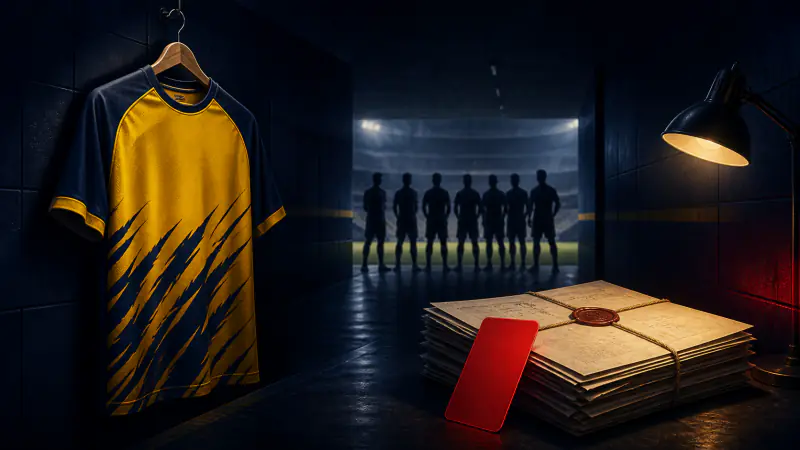
The Harimau Malaya FIFA ban is the biggest scandal in Malaysian football history — a case that began with a famous 4–0 win and ended with seven international players suspended, the national federation fined, and the country’s entire naturalisation strategy in ruins. Here is the full story, told straight.
In 2024–25 the Football Association of Malaysia (FAM) rapidly registered a group of foreign-born players as Malaysians and fielded them in official matches, including a 4–0 defeat of Vietnam in Asian Cup qualifying in June 2025. FIFA investigated the paperwork behind those registrations, concluded that falsified documents had been used, fined FAM and banned seven players for 12 months. FAM appealed to the Court of Arbitration for Sport — and on 5 March 2026, CAS dismissed the appeal, leaving the sanctions standing.
The players banned for 12 months from official matches:
All seven had been presented as heritage players — foreign-born footballers with claimed Malaysian ancestry. The CAS outcome does not rule on their personal good faith; the sporting sanction attaches to the falsified documentation used in the process.
Beyond FIFA’s jurisdiction, the case triggered domestic scrutiny. Malaysia’s Enforcement Agency Integrity Commission (EAIC) examined how citizenship and documentation processes were handled on the government side — the question of how paperwork of this kind entered official channels at all. That review, and the political argument around it, is a reminder that this stopped being a football story months in: it became a question of institutional integrity.
Sporting cost. Malaysia built its 2025 attack around the recruits. Without them, results collapsed, and with them went the Asian Cup qualifying campaign and the coach. The current squad is effectively a rebuild from the domestic core.
Strategic cost. The affair discredited naturalisation as a shortcut, in a region where rivals used similar (lawful) programmes successfully. FAM’s stated direction has shifted back to youth development — slower, harder, and now the only road open.
Reputational cost. A CHF 350,000 fine is survivable; being the case study in FIFA’s enforcement of registration integrity is more expensive. Restoring trust — with FIFA, with fans, with the players’ own families — is the real bill.
Domestically, the case cleaved opinion in two. One camp read it as humiliation demanding accountability — resignations, reform, and a full public accounting of how falsified paperwork entered official channels. The other emphasised the players’ position: men who had committed careers to Malaysia, sanctioned for documentation they did not personally produce. Both camps converged on one point — that the episode ended the era of shortcut-building, which is why FAM’s subsequent messaging has leaned so heavily on academies and youth pathways.
The bans stopped the players’ international careers but not their club ones, and by September 2026 their situations had diverged.
Facundo Garcés suffered the cruellest turn. On 8 September 2026 his club, Deportivo Alavés of Spain, confirmed a torn anterior cruciate ligament in his right knee, with surgery to follow within days. Malaysian outlet Makan Bola, reporting the club’s statement, said he is expected to miss most of the 2026/27 season, which would carry him well past the point at which his ban expires.
Rodrigo Holgado is at Coquimbo Unido in Chile, and on 8 September DPMM FC, the Brunei-based Super League club, publicly declared an interest in signing him. No deal exists: Sukanz reported that the Malaysian league’s next transfer window runs from 5 January to 1 February 2027, and Makan Bola reported that any move would wait until then. Reports differ on the precise expiry of his suspension. Sukanz cites 25 September 2026 for Holgado’s FIFA ban, while Makan Bola reports the seven being cleared for official matches in November 2026. We will state the date once it is confirmed by FAM or FIFA.
We have not yet verified current clubs for the other five and will add them as reliable reports appear.
The 12-month player bans run their course into late 2026, after which each player’s eligibility becomes a case-by-case question — legal eligibility, form, and the appetite of a new coaching staff to reopen the wound. FAM, meanwhile, must show FIFA and its own public that registration processes have been reformed.
There is an early sign of what that looks like. On 13 September 2026 FAM announced that FIFA had reviewed and cleared two JDT players to represent Malaysia: Bergson da Silva, through five years of continuous residence, and Brad Tapp, through Malaysian ancestry verified against his lack of a senior Australian cap. A third JDT player, winger Manuel Hidalgo, was cleared on 16 September through the same residence route, while KL City defender Giancarlo Gallifuoco’s case remains unresolved. The difference from 2025 is the order of events: FIFA checked first, and the players will make their debuts at the FIFA ASEAN Cup later this month.
We keep this explainer updated as the situation develops; the date at the top shows the last revision. For how the team is coping on the pitch in the meantime, see our squad guide — and for the longer arc of why Malaysia keeps reaching for shortcuts, our piece on why Malaysia has never played at a World Cup.
Seven naturalised players were sanctioned: Gabriel Felipe Arrocha, Facundo Garcés, Rodrigo Holgado, Imanol Machuca, João Figueiredo, Jon Irazábal and Héctor Hevel. Each received a 12-month ban from official matches.
FIFA found that falsified documents were used in the players' registration process, a breach of Article 22 of the FIFA Disciplinary Code covering forgery and falsification. FAM was fined CHF 350,000, a sanction upheld by CAS in March 2026.
No. On 5 March 2026 the Court of Arbitration for Sport dismissed FAM's consolidated appeal. The panel confirmed the fine and the player bans, although the bans apply to official matches rather than to all football activity.
Malaysia's Enforcement Agency Integrity Commission (EAIC) conducted a review into how citizenship and documentation processes were handled domestically — a separate track from FIFA's sporting sanctions, reflecting how far beyond football the case reached.
Who plays for the Malaysia national football team in 2026? A guide to the Harimau Malaya squad, key players, the banned naturalised seven and the U23 side.
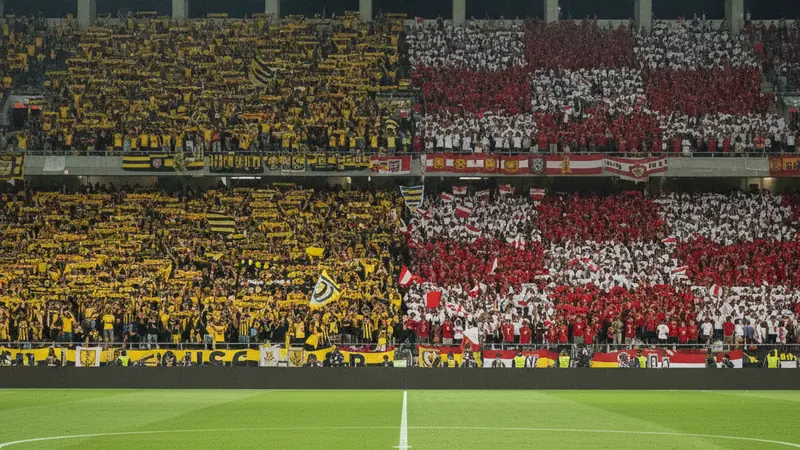
The Causeway Derby explained: how the Malaysia vs Singapore rivalry began in 1958, the head-to-head record, the three 6-0 wins and what the 2026 rout means.
The FIFA ASEAN Cup explained: how Malaysia went unbeaten yet missed the final on goals scored, FAM's stoppage-time complaint to FIFA, and the bronze match.