
Guides
Haze and Malaysian Football: The Rules Explained
How haze affects Malaysian football: the API bands, the MFL's play-on threshold, government and school guidelines, and which matches were postponed in September 2026.
Updated 20 August 2026 · Kedafa editorial
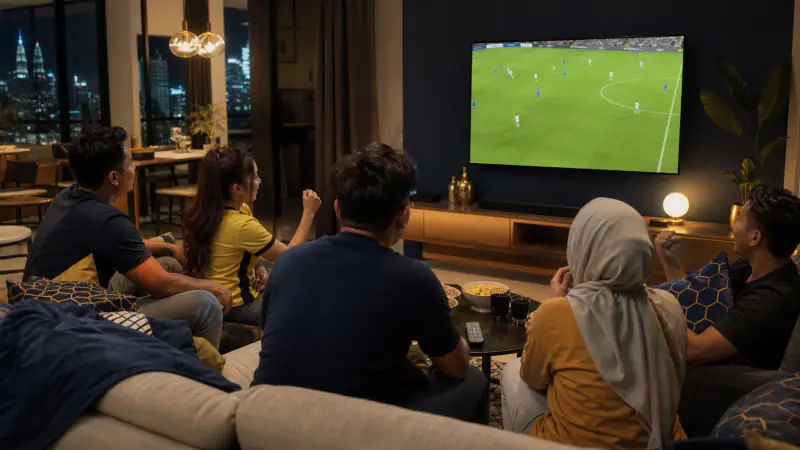
Where to watch football in Malaysia used to have a one-word answer: Astro. Not anymore. The 2026 World Cup broke a twenty-year habit, rights now scatter across free-to-air, telco TV and streaming apps, and the honest answer changes by competition. This guide maps the landscape as of August 2026 — and tells you how to check when it shifts.
For twenty years Malaysians watched World Cups on Astro. For the 2026 tournament — the 48-team edition in North America that Spain won, beating Argentina 1–0 after extra time on 19 July — the primary Malaysian rights went elsewhere:
Why this matters beyond one tournament: it proved Malaysia’s free-to-air broadcaster plus a telco platform can outbid the incumbent for the biggest property in sport. Expect every future rights cycle — including domestic ones — to be genuinely contested, which is good news for viewers and chaos for anyone writing guides like this.
Malaysia sits at UTC+8, which shapes the whole viewing culture. European football is a night-owl habit: England’s 3pm Saturday slot lands at 10–11pm, and Champions League knockouts finish after 5am. The North American World Cup was even harsher — group matches at 3am, 6am and 9am Malaysian time, turning mamak stalls into breakfast venues.
The flipside is that ASEAN football is prime-time football. Super League fixtures kick off at 8–9pm Malaysian time, ASEAN Club Championship nights fit the evening perfectly, and a trip to a stadium — say, Bukit Jalil for a final — needs no alarm clock. If you’re a Malaysian fan tired of ruining your sleep for other continents’ leagues, the local product schedules itself around your life.
Broadcast rights only describe half of how Malaysia actually watches football. The other half is communal: the mamak stall with a wall-mounted screen is the country’s true football venue, where matches are watched over teh tarik and roti canai regardless of whose subscription feeds the TV. During World Cup 2026’s brutal 3am–9am kick-offs, mamaks simply became breakfast venues; during ASEAN prime-time fixtures they fill like small stadiums. State governments and venues also stage official big-screen viewings for the biggest Harimau Malaya nights — worth seeking out for finals, when Bukit Jalil sells out and the overflow wants somewhere loud.
The practical tip for visitors: if a match matters in Malaysia, you don’t need a subscription to see it. You need a plastic chair.
Broadcast rights move, and any static list — including this one — decays. The reliable checking order:
We revise this guide when the rights map changes; the date at the top is your freshness check. For what’s actually worth watching once you’ve found the channel, start with our Super League guide and the national team’s rebuilding season.
Free-to-air on RTM (TV1, TV2, Sukan RTM and TV Okey, streaming via RTMKlik) and in full on Unifi TV, which carried all 104 matches. Astro, the World Cup broadcaster for two decades, did not hold the primary rights.
Domestic league rights have been shared in recent seasons across Astro's sports channels, Unifi TV, RTM and the sooka streaming app. Check the MFL's official announcements each season, as packages shift.
Yes — RTM's channels and RTMKlik streaming carry selected national-team matches, major tournaments and some domestic fixtures free-to-air. The free sooka tier has also carried selected local matches.
Malaysia is UTC+8: a 3pm England kick-off is 10pm or 11pm in Malaysia depending on daylight saving, and Champions League nights run past 3am — which is why ASEAN football's evening kick-offs are precious.