Bukit Jalil National Stadium (TM Stadium Nasional)
Updated 20 August 2026 · Kedafa editorial
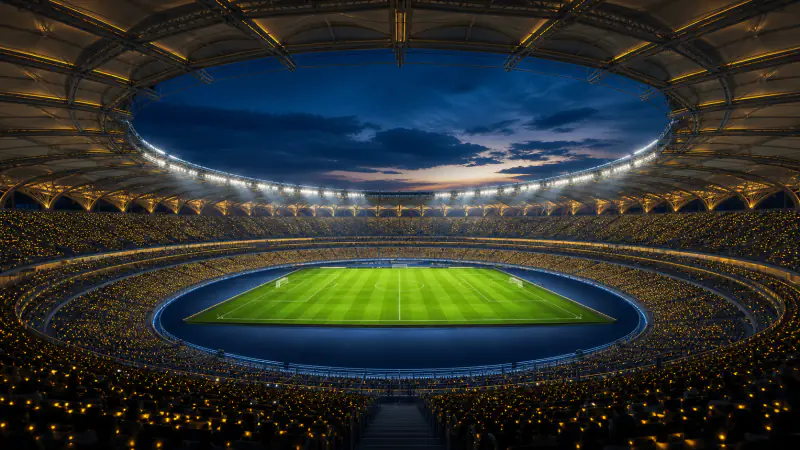
Every Malaysian football story ends up here eventually. Bukit Jalil National Stadium — since March 2026 officially TM Stadium Nasional — is the country’s colosseum: an ~87,500-capacity bowl in southern Kuala Lumpur that hosts every final that matters, every home international that counts, and most of the biggest concerts in the region. This guide covers the essentials: size, history, the new name, and how to survive a matchday there.
The biggest stadium in Southeast Asia
The headline facts: Bukit Jalil holds approximately 87,500 spectators (official figures between 85,500 and 87,500 circulate depending on configuration and era), making it the largest stadium in Southeast Asia, among the largest in Asia, and comfortably inside the world’s top twenty by capacity. It anchors the National Sports Complex in Bukit Jalil, about 20 minutes south of central Kuala Lumpur.
Built for the 1998 Commonwealth Games — the event that announced modern Malaysia’s sporting ambitions — it has since staged SEA Games, AFF Championship finals, World Cup qualifiers, and every Piala Malaysia final of consequence, including JDT’s 2–0 win over Kuching City in May 2026.
Stadium fact file
- Official name
- TM Stadium Nasional (since 6 Mar 2026)
- Capacity
- ~87,500
- Opened
- 1998 (Commonwealth Games)
- Location
- Bukit Jalil, Kuala Lumpur
- Rank
- Largest in Southeast Asia
- Rail access
- LRT Bukit Jalil (Sri Petaling line)
The TM renaming, explained
In March 2026, Perbadanan Stadium Malaysia announced a three-year naming-rights partnership with Telekom Malaysia, effective 6 March 2026. The National Stadium became TM Stadium Nasional; the neighbouring Putra Indoor Stadium became Unifi Arena, after TM’s broadband brand. It was the first naming-rights deal for the national stadium since it opened — part of a broader push to make Malaysia’s costly venues pay for themselves.
Expect the names to coexist for years. Malaysians have called the ground “Bukit Jalil” or simply “Stadium Nasional” for a generation; tickets, transit maps and habit will keep the old names alive alongside the sponsor’s. On this site we use both, because search behaviour does too.
Inside the bowl: seating and views
The stadium is a classic continuous two-tier oval with the main (west) grandstand carrying premium seating and media, the opposite east side offering the best value sightlines, and the curves behind the goals housing the loudest support — for national-team matches, the Ultras Malaya end sets the atmosphere. A running track separates the front rows from the pitch, so the closest football views are mid-tier on the sides rather than pitchside. For finals, neutral fans generally do best in east-side upper-tier central blocks: full-pitch views without premium pricing. Seating maps for specific events are published per event by the ticket vendors — configurations change, so check the event’s own chart before buying.
Matchday practicalities
- Take the train. The LRT Sri Petaling line’s Bukit Jalil station is beside the complex. Roads and parking lock up two hours before big kick-offs; rail is faster in both directions.
- Arrive early for finals. Security lines for 80,000-plus crowds are long, and the walk from station to gate takes longer than first-timers expect.
- Weather plan. Evening kick-offs mean tropical downpour risk; most seating is covered by the roof ring, but the gate queues aren’t.
- Cashless and bag rules vary by event organiser — check the event’s official notices.
From 1998 to now: the stadium’s eras
The bowl has been renewed twice over. Built for the 1998 Commonwealth Games — the largest sporting event Malaysia had staged — it spent its first two decades as the fortress of the national team’s best nights, including AFF Championship finals in front of full houses. A major refurbishment ahead of the 2017 SEA Games modernised the seating, lighting and facades, giving the ground its current look. The 2026 naming-rights deal marks the third era: the monument learning to pay its own bills. Through all three, the constant is scale — no venue in the region approaches it, which is why every competition’s organisers, from the Piala Malaysia to touring promoters, default here.
More than football
Bukit Jalil’s calendar is now as much entertainment as sport — the world’s touring mega-acts route through it, which is why “stadium Bukit Jalil event today” is one of Malaysia’s most-searched venue queries. For football purposes, though, its role is singular: it is where the national team’s biggest nights happen and where every Malaysian club dreams of playing in May. Until someone builds bigger — and in Southeast Asia, no one has — the road to every Malaysian trophy ends in Bukit Jalil.
Frequently asked questions
What is the capacity of Bukit Jalil National Stadium?
Around 87,500 — the largest stadium in Southeast Asia and among the biggest in the world. Capacity figures between 85,500 and 87,500 appear across sources depending on configuration.
Why is Bukit Jalil now called TM Stadium Nasional?
Telekom Malaysia acquired naming rights in a three-year deal effective 6 March 2026. The National Stadium became TM Stadium Nasional, and the neighbouring Putra Indoor Stadium became Unifi Arena.
How do I get to Bukit Jalil stadium?
The LRT Sri Petaling line's Bukit Jalil station sits beside the National Sports Complex — rail is strongly recommended on event days, as car parks and surrounding roads congest hours before kick-off.
What events are held at Bukit Jalil?
Malaysia's biggest football matches — national team fixtures and cup finals — plus major concerts and multi-sport events. It hosted the 1998 Commonwealth Games and multiple SEA Games.